Event Recap & Takeaways from TTRA MOF
By John Capps and Amy Castelda
At the recent Marketing Outlook Forum (MOF) hosted by the Travel and Tourism Research Association (TTRA), one theme came across clearly across multiple presentations and industry discussions: travel demand remains resilient, even as consumers feel more cautious about the economy.
Across recent industry tracking, travel continues to rank as a top discretionary priority. While many consumers report feeling worse about their personal finances, they’re still reluctant to cut vacations and are more likely to trim spending in other areas first.
Demand Isn’t Disappearing, It’s Shifting
What’s changing is how people plan to travel. The data suggests:
More price sensitivity and value-seeking behavior
Slight softening in expectations to travel or spend more
Continued strength in domestic and closer-to-home trips
Some softness in international demand tied to geopolitical perceptions
In other words, travel intention is still there, but decisions are being made more carefully.
A Two-Speed Travel Economy
Another emerging pattern is a widening gap by income segment.
Higher-income travelers continue to book experiences and premium trips at steady levels, while middle-income households are more likely to delay, shorten, or trade down. This “two-speed” traveler dynamic is showing up across multiple datasets.
Experience Still Matters
Despite economic headwinds, the emotional value of travel remains strong. Travelers continue to prioritize experiences that provide reassurance, connection, and memorable moments, helping explain why sentiment often stays positive even when some performance metrics soften.
What This Means
The current environment isn’t a demand collapse, but rather a recalibration.
Travel is still a priority
Consumers are more value-focused
External factors like politics and perception are influencing destination choice
Higher-income and experience-driven travelers are disproportionately footing the growth
So What?
The sky isn’t falling, but the market is fragmenting. For destination marketers, the opportunity is to continue driving demand while reinforcing value, reassurance, and relevance.
Want More?
In addition to the key takeaways above, we saw a number of brilliant recap posts from other attendees we want to share. Two of our favorites are:
How MOF challenged how I think about data, tools, and impact by Ailin Fei, Data & Research Manager, Visit Austin
⏺️ I’m rethinking our research stack. More tools ≠ better insights. The real value is in transparent methodology and whether the data actually informs decisions.
⏺️ Ad effectiveness needs to connect to human behavior. The most compelling insights aren’t clicks or impressions. They are about longer stays, deeper engagement, and word‑of‑mouth impact.
⏺️ Great data storytelling is underrated. The best presenters made complex trends feel obvious by focusing on clarity, narrative, and the “so what,” not just the charts.
⏺️ Traveler trends are getting more nuanced. From slowcations to event‑driven travel, today’s traveler is values‑led and experience‑driven, with value consistently outweighing price.
⏺️ AI is already changing how we share insights. Not as a replacement for thinking, but as a way to synthesize, translate, and deliver research more accessibly to stakeholders.
⭐ My biggest takeaway is that the future of destination research isn’t about more data, but about asking better questions and telling clearer stories with it.
A few ideas that stayed with me by Matt Wagner, SVP, Client Services, Target 10 LGBTQ+ Marketing Agency
🚗 Sports travel is big, but it’s closer to home than we tend to assume.
In the U.S., sports-driven trips are overwhelmingly drive-based—people aren’t crossing oceans, they’re crossing state lines. Which means the real opportunity isn’t just the event itself, but how destinations show up once travelers arrive.
🧠 AI is welcome when it removes friction, not when it removes agency.
Travelers are enthusiastic about AI for translation, rebooking, check-in, and real-time recommendations. Far fewer want it to decide where they go (or using their credit card). AI opens the door, but humans still want to feel like they chose to walk through it.
🔍 Search + discovery are quietly being rewritten.
With AI overviews now appearing across a large share of travel queries, inspiration content is increasingly summarized before it’s clicked. Being “optimized” matters less than being referenced. Authority is becoming ambient.
🎯 Demographics are loosening their grip.
Across sessions, there was a clear shift away from age and income alone toward motivation, mindset, and moment. Travelers are situational, and context changes behavior fast.
🎭 Once people arrive, vibes beat logistics.
Food, music, atmosphere, and local texture consistently outranked efficiency plays. People don’t travel to admire operational excellence, but rather to feel something.
💸 Cost is still the buzzkill.
Ticket prices and the cost of getting there remain the biggest barriers. Not safety, not sustainability, just math. Which makes perceived value, not just price, a critical lever.
Thank You’s All Around 🙏
A huge shoutout to TTRA for delivering such a successful event in the middle of a once-in-a-lifetime snowstorm in Charlotte.
Grateful to Visit NC and Charlotte RVA for hosting and the incredible speakers who pushed our thinking, inspired new ideas, and made us all a little sharper.
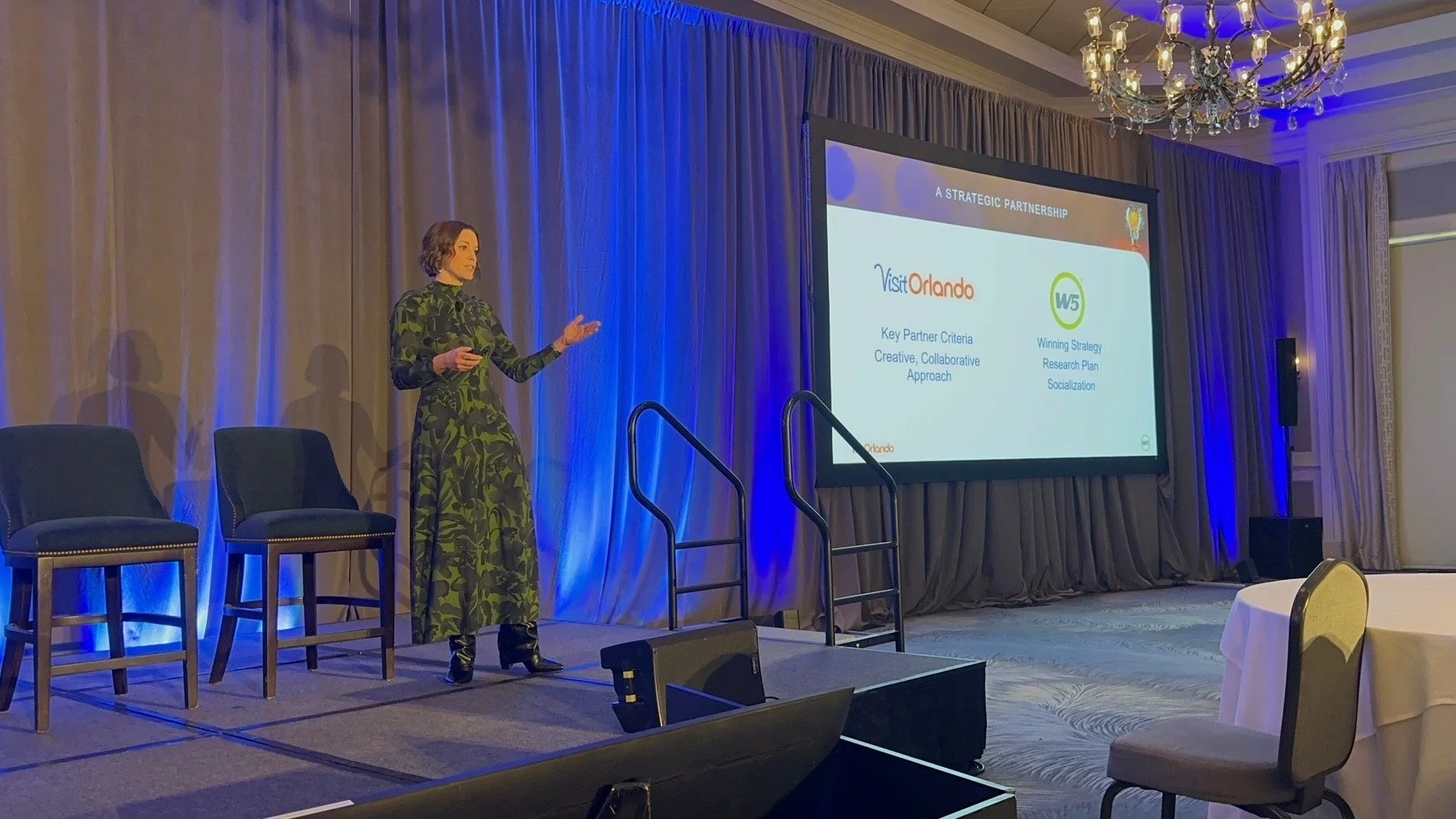
Thank you to Visit Orlando for co-presenting with us for the session, Turning Traveler Passions into Marketing Power. (Want a copy of our presentation, email acastelda@W5insight.com!)