
From Concept to Confidence: A Guide to Creative Testing
By Nick Lowery
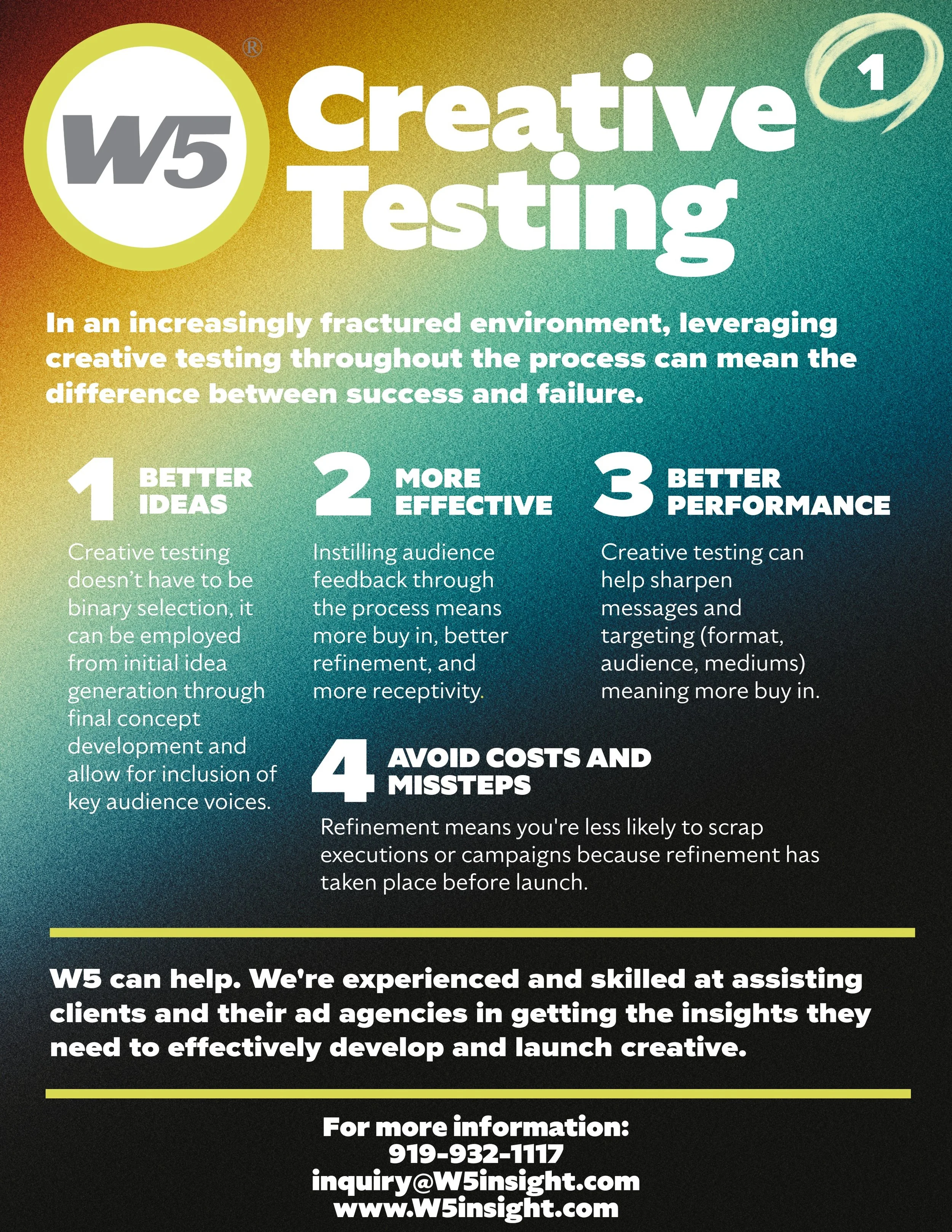
Creative testing is one of the most direct ways to understand how ideas actually land. It gives W5 the chance to look beyond what people say at face value and explore how they react in the moment and see what stands out and what falls flat. Those responses often reveal more about how a piece of creative will perform way before it even touches the market.
In our work at W5, we focus on understanding the true need behind each research request, why it matters and how it aligns with the client’s priorities. This ensures our approach is strategic and delivers insights that maximize impact.
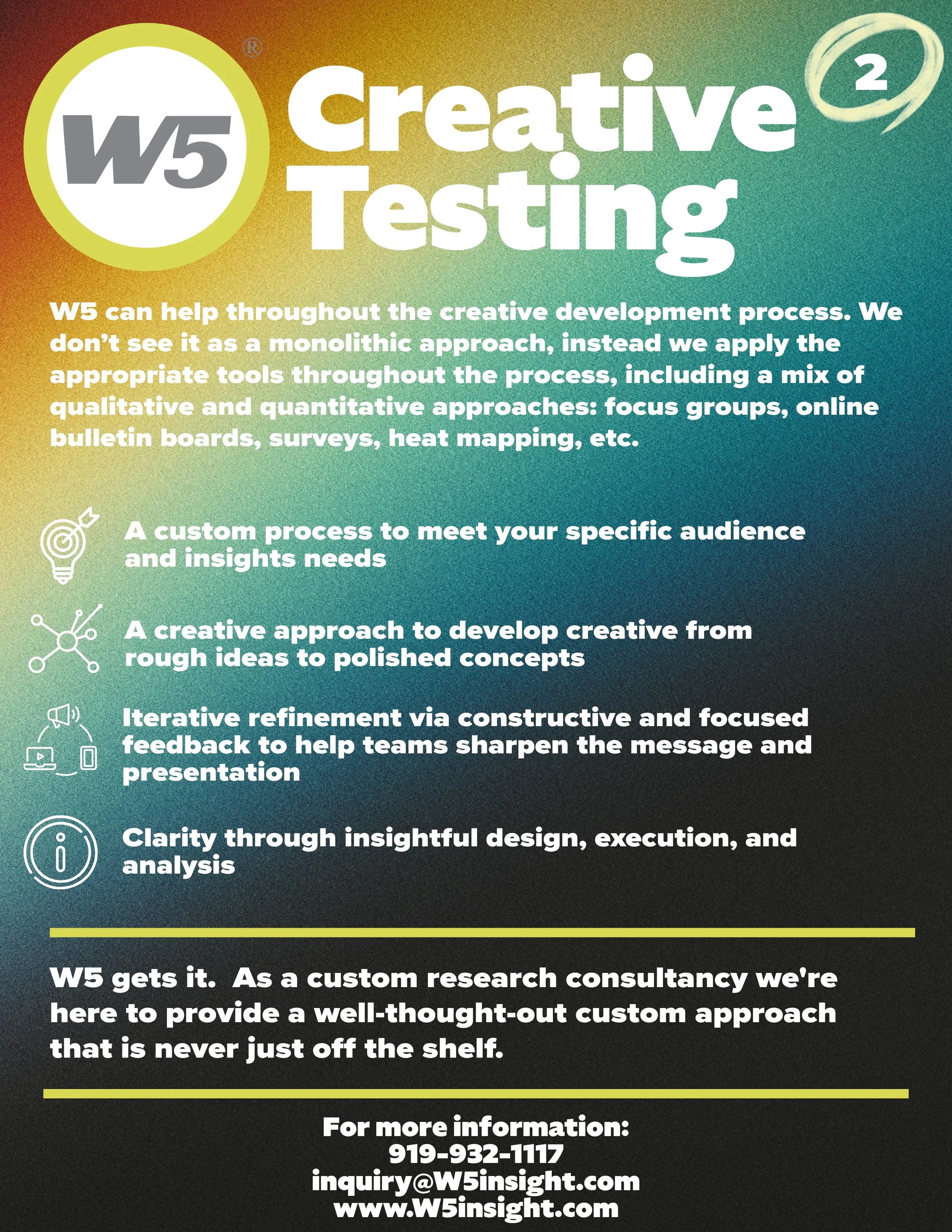
From there, creative testing can take a number of different forms depending on the client’s current creative stimuli stage and need. Sometimes it is early stage concept testing, where ideas are still rough and exploratory. At this stage, the focus is less on polish and more on understanding core messaging. W5 always try and articulate that we want to test the message and idea around the theme, because you can have the pretties campaign but if the message doesn’t resonate, pretty is all it will be. Other times, we are testing more developed creative, where the emphasis shifts to execution, including tone, branding, and how everything comes together for more polished creative.
One approach W5 has found particularly effective is combining qualitative and quantitative methods. Qualitative sessions, whether interviews or groups or ethnography, allow us to dig deeper into reactions and uncover the why behind how people feel about the creative. Quantitative testing helps validate those findings at scale, giving clients confidence that the insights hold across a broader audience. The balance between the two is where creative testing really comes to life in our experience.
What I’ve come to appreciate most is how directly creative testing is approached and how versatile it is in practice. The insights do not just sit in a report. They influence messaging, shape campaigns, and guide creative decisions in a tangible way. There is something rewarding about seeing that link between what we uncover in our research at W5 and what eventually reaches audiences.
Overall, creative testing has been one of the most engaging parts of my experience at W5. It challenges you to think both analytically and creatively, and it continues to evolve depending on the needs of the project. More than anything, it reinforces the idea that strong research is not just about answering questions. It is about asking the right ones in the first place.
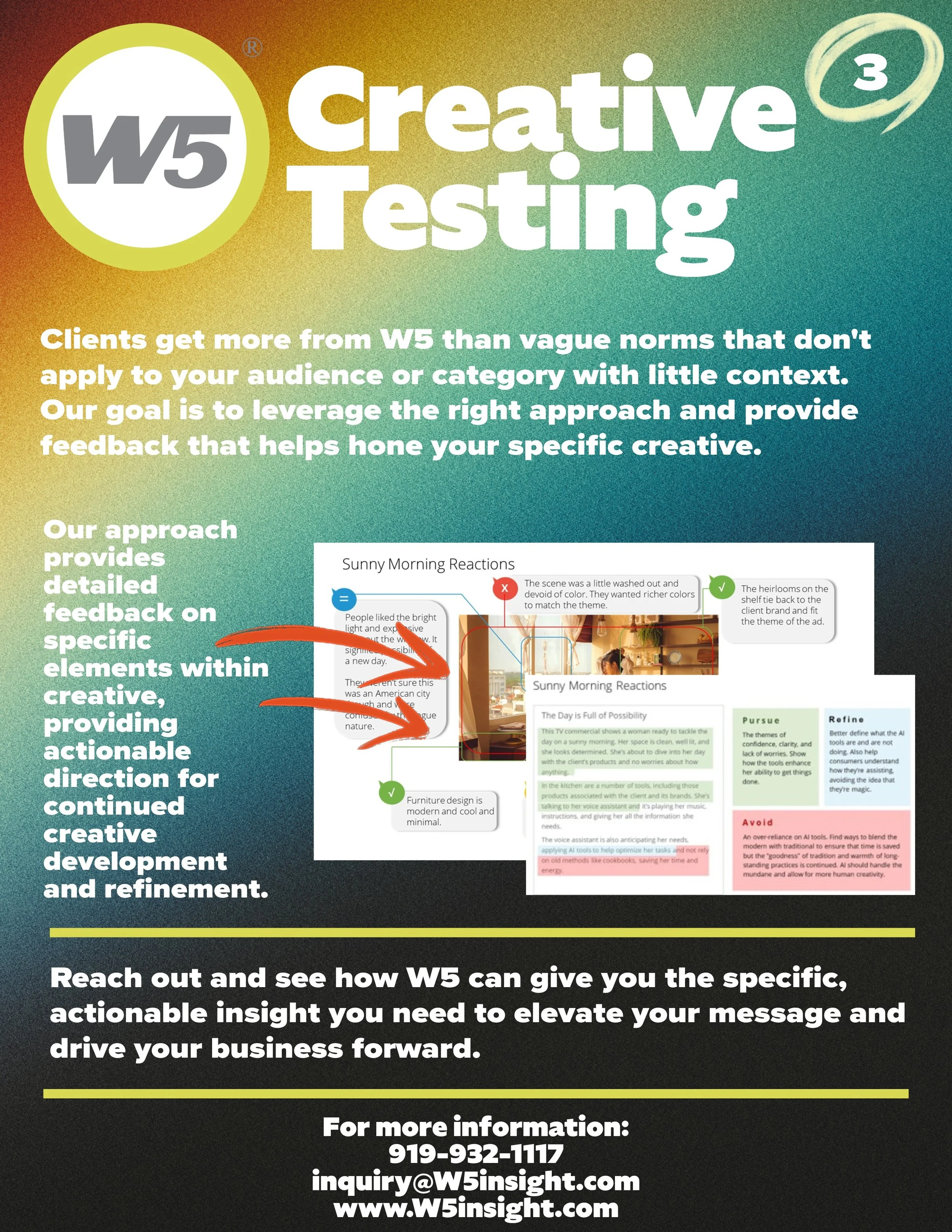
If you are interested in pressure testing some early stage creative or getting a read on some flushed out creative campaigns, we would love to connect and talk through how we can support. Feel free to reach out to request a sample report and get a sense of our approach to creative testing.