
Let’s Talk Trackers (Brand, Ad, Pre/Post)
By Amy R. Castelda
There’s no shortage of data available to marketers today. But having access to more data doesn't necessarily mean having a clearer understanding of how your brand is performing.
That's where tracking research comes in.
Ideally, every organization has some form of tracking research in its toolbox. If you don't, it may be time to consider it. And if you do, it's worth asking whether your current tracker is delivering the insights your organization needs or simply checking a box.
At W5, we believe the value of tracking research goes beyond monitoring metrics. The real opportunity is understanding what's driving changes in consumer perceptions and behaviors, identifying opportunities for improvement, and making smarter, more informed marketing decisions.
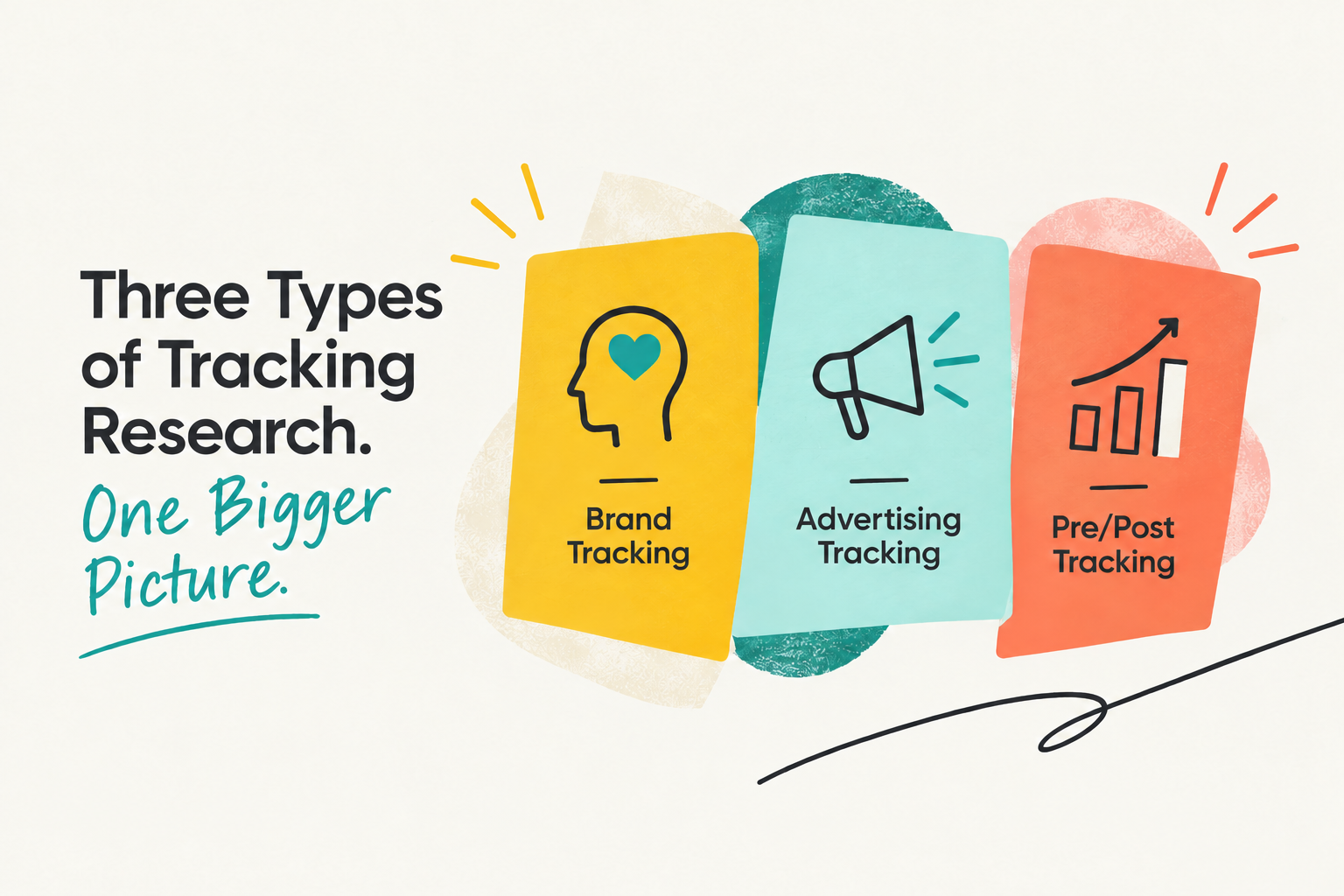
Depending on your business objectives, there are three types of tracking research worth considering: brand tracking, advertising tracking, and pre/post campaign tracking. While each serves a different purpose, all three help connect marketing efforts to meaningful business outcomes.
1. Brand Tracking: Understanding Where Your Brand Stands
How is your brand performing in the minds of consumers, and why?
Brands don't exist in a vacuum. Consumer expectations change, competitors evolve, and market conditions shift. A brand tracker provides an ongoing view of brand health, helping organizations understand how perceptions evolve over time and where there are opportunities to strengthen their positioning.
While awareness and consideration are important measures, they're only part of the story. Understanding what drives those perceptions, and what may be holding consumers back, is where tracking becomes especially valuable.
Common areas of measurement include:
Brand awareness, familiarity, consideration, and preference
Brand image, perceptions, and associations
Key drivers and barriers to engagement or purchase
Consumer needs, motivations, and decision-making
Marketing and communications effectiveness
The real value comes from connecting these measures to the broader business. Are consumers becoming more familiar with your brand but not considering it? Are certain attributes becoming more important in the category? Is your brand gaining ground against competitors?
A well-designed brand tracker helps answer these questions and provides the context needed to inform brand positioning, messaging, and future marketing investments.
2. Advertising Tracking: Understanding What's Working in Market
Is your advertising reaching consumers, resonating with them, and building your brand?
Launching a campaign is one thing. Understanding how it performs once it's in market is another.
Advertising tracking helps organizations evaluate campaign performance by measuring what consumers saw, remembered, and responded to. It provides a clearer picture of whether advertising is breaking through and communicating the intended message.
And while impressions, clicks, and other behavioral metrics are useful, they don't always tell you what consumers actually took away from the advertising.
Common areas of measurement include:
Advertising recall and exposure
Creative and message effectiveness
Campaign performance metrics
Message recall and brand attribution
Advertising tracking helps connect campaign exposure to consumer response. Are people remembering the advertising? Are they connecting it to the right brand? Is the intended message coming through?
These insights can help marketing teams and agencies understand what's working, identify opportunities to optimize creative and messaging, and make more informed recommendations for future campaigns.
3. Pre/Post Campaign Tracking: Measuring What Changed
Did your campaign actually change the way consumers think about your brand?
Sometimes the most important question isn't how a brand is performing over time, but whether a specific marketing initiative made a difference.
Pre/post campaign tracking is designed to answer that question.
By measuring consumer perceptions before and after a campaign launches, organizations can better understand whether marketing efforts influenced awareness, consideration, sentiment, and intent.
Common areas of measurement include:
Changes in brand awareness and consideration
Shifts in consumer perceptions and sentiment
Purchase or engagement intent
Overall campaign impact over time
This approach is particularly useful when launching a new brand campaign, introducing a new positioning, or making a significant marketing investment.
For example, did the campaign increase awareness among the intended audience? Did it change how consumers perceive the brand? Did it give people a new reason to consider your product or service?
By establishing a baseline and measuring again after launch, pre/post tracking helps organizations evaluate progress against their original objectives and identify what they've learned for the next initiative.
Of course, not every shift can be attributed solely to advertising. Market conditions, competitive activity, and other influences matter, too. That's why thoughtful research design and interpretation are so important.
Tracking Is Only as Valuable as What You Do With It
While these three approaches measure different things, they share one important principle: the goal isn't simply to collect more data. It's to make better decisions.
That's why W5 takes a customized approach to tracking research, starting with the business questions that matter most and designing a research program around them. We believe the best trackers do more than show whether a metric went up or down. They help explain what the results mean, why they matter, and where to go next.
Whether you're considering a tracker for the first time or wondering if your existing program could be working harder, we're always happy to talk through the options.
Additional Resources
Interested in learning more about how tracking research can support smarter marketing decisions? Explore these W5 tracking resources:
Have questions about tracking research? We'd love to help you determine which approach makes the most sense for your business.